

Effective leadership is the foundation of an entire organization. When there are challenges within an executive team or among managers, the effects do not remain at the leadership level — they can quickly become visible in collaboration, decision-making, the smooth running of everyday work, and people’s energy, well-being, and motivation.
The executive team plays a central role in defining the company’s direction, making decisions, and implementing its strategy. Managers, in turn, are key to turning goals, decisions, and ways of working into everyday action. When collaboration between these levels does not work, the shared direction can become unclear, decision-making more difficult, and goals disconnected from everyday work.
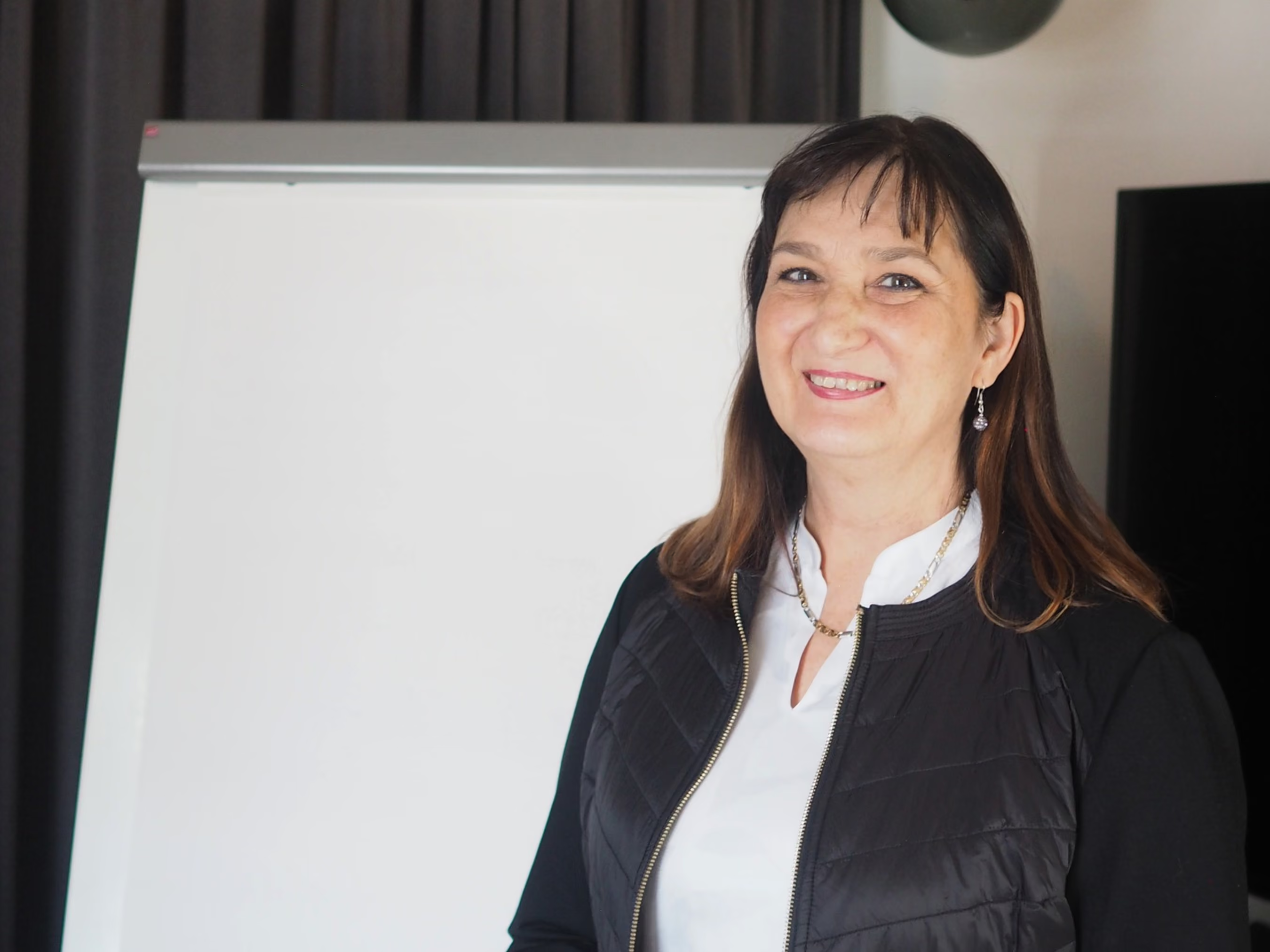
Outi Impivaara
Develop your leadership through coaching
Executive team and leadership coaching provides an opportunity to pause and examine the current state of leadership, collaboration, communication, and ways of working. At the same time, we clarify goals and strategy, as well as how they translate into practical leadership.
The aim of the coaching is to strengthen the ability of executive teams and managers to lead with clear objectives, collaborate effectively, handle challenging situations, and consistently turn agreed decisions into action.
When leadership works, the organization as a whole is better positioned to succeed.
Through coaching, you will

Who is the coaching for?
The coaching is designed for leaders who want to develop their own leadership and strengthen leadership across the organization.
Coaching can be particularly valuable when:
- leadership or management is undergoing change
- the organization has a new strategy, goals, or operating model
- there is friction, ambiguity, or siloed thinking in collaboration
- the shared direction and goals need to be clarified
- translating strategy or goals into everyday action is challenging
- greater clarity and consistency are needed in leadership and decision-making
- there is a need to strengthen the ability to address difficult issues, give feedback, or challenge constructively
- the leadership and organizational culture need to be developed or renewed
- there is a desire to strengthen your own leadership approach and understand its impact on others
- there is a need to build more consistent and goal-oriented leadership across the organization.

Do any of these sound familiar?
Below are some of the most common challenges and issues I have encountered when coaching executive teams and managers. Recognizing these challenges can often help identify where the executive team’s ways of working and collaboration would benefit most from development.
Leadership and direction
- Priorities and direction are not clear enough.
- Decisions are made, but they don’t always turn into action.
- Leaders are too caught up in day-to-day issues to focus on the bigger picture.
- Leadership practices vary across the organization.
Communication
- Important issues are not discussed openly enough.
- Information doesn’t always reach the right people at the right time.
- Difficult conversations are postponed or avoided.
- People make assumptions instead of asking and listening.
Collaboration
- Teams or functions work in silos instead of towards shared goals.
- Roles and responsibilities are not always clear.
- Collaboration depends too much on individual relationships.
- Different perspectives can lead to friction rather than better decisions.
Trust and accountability
- People hesitate to speak up or challenge each other.
- Agreed actions are not always followed through.
- Feedback is too limited, too cautious, or comes too late.
- Responsibility is easily shifted instead of taken.
Change
- Change creates uncertainty, but there isn’t enough time or space to address it.
- The reasons behind changes are not understood or communicated clearly.
- People know what is changing, but not always what it means for them.
- Leaders struggle to maintain direction and engagement during change.
Everyday leadership
- Managers spend too much time solving problems for others.
- Expectations are unclear or followed up inconsistently.
- Leadership becomes reactive rather than proactive.
- There is too little time for people, feedback and meaningful conversations.
in just 3 minutes!
What we aim to achieve
The goal of the coaching is for leaders and managers to:
Clearer direction and priorities
Create a shared understanding of where you are going, what matters most, and what needs to happen next.
Stronger leadership and decision-making
Strengthen leaders’ ability to make decisions, take responsibility, and turn decisions into action.
Better communication
Build a culture where people communicate openly, listen to each other, give feedback, and address difficult issues early.
Greater trust and accountability
Create an environment where people can speak up, challenge each other constructively, and take ownership of agreed actions.
More effective collaboration
Clarify roles and responsibilities, break down silos, and make better use of different perspectives and strengths.
Lasting change in everyday leadership
Turn insights into practical leadership habits and ways of working that continue long after the coaching ends.
The executive team learns to look at the company as a whole, make decisions together, and take collective responsibility for strategy execution.
The aim is to strengthen managers’ ability to lead people towards shared goals and build a well-functioning workplace.
The result: stronger and more consistent leadership
At its best, coaching leads to leadership that is reflected throughout the organization in greater clarity of direction, stronger collaboration, and more consistent ways of working.
The executive team works more cohesively and focuses on what matters most. Managers are better equipped to translate goals and agreed ways of working into everyday practice. Communication becomes more open, difficult issues can be addressed, and decisions translate into concrete action.
When leadership is aligned across different levels of the organization, it becomes easier for the entire organization to work towards a shared direction.



Based on my experience, I have a feeling that almost all problems within an organization or team are related to leadership? And more than 90% of these are challenges are related to communication?
People do not know what is expected of them or how well they are performing in their role.